During the last 50 years, Apple reimagined private computer systems, catalyzed the period of the smartphone, enlarged an iPhone and known as it the iPad and garnered a robust place in wearable tech via its Watch collection and its AirPods. It additionally popularized software program and companies like its App Retailer, FaceTime, iCloud, iMessages and lots of extra. For lots of us, the primary time we pinched-to-zoom on a photograph was doubtless on an iPhone.
Nevertheless, Apple provides and it takes away. Issues have needed to change, be eliminated and customers have to maneuver on to no matter’s new. For higher or worse, the load of Apple’s affect has led to total product classes following go well with. Or, extra usually, there’s resistance, complaining after which… following go well with. With the good thing about hindsight, most of those circumstances are examples of Apple seeing the place know-how was going and getting forward of a transition that may have been inevitable. Usually, these transitions have brought on short-term ache for some, however time has confirmed Apple (largely) right about dropping older tech.
As Sir Arthur Quiller-Couch as soon as mentioned: homicide your darlings. Listed below are among the darlings we’ve misplaced through the years.
The loss of life of the disk drive (1998)
This can be a two-parter. The iMac G3 marked Steve Jobs’ return. The colourful all-in-one Mac was a brand new begin in some ways. In 1998, Apple ditched the usual ports and myriad cable varieties of private computer systems, going all in on USB and a little-known factor known as the web. (Actually, that’s what the ‘i’ in iMac stands for.)
In doing so, it additionally ditched the three.5-inch floppy disk drive — though it did have a read-only optical disk drive. Even with sluggish web and USB switch speeds on the time, the comfort was plain to see and it led to a decade of thumb drives of ever-increasing storage limits. Excessive-capacity alternate options to the floppy disk, just like the Zip disk and even Minidisc, tried to bridge the hole, however by no means gained the widespread traction and adoption of the unique disk drive. However flash drives and, later, internet-based file storage rapidly made them out of date anyway. Apple was just a bit early with its dismissal.
Transportable music gamers (2007)
Regardless of Apple’s iPod being the de facto music participant on the time, it was supplanted by the corporate’s personal largest hit: the iPhone. At its peak, the iPod made Apple the zeitgeisty tech firm it’s immediately. It dominated the MP3 participant market, and by 2006, iPods had been liable for 40 % of the corporate’s income. And that was earlier than the period of Apple together with a free U2 album with each iTunes account.
When the iPhone launched in June 2007, it was swiftly adopted by the iPod Contact in September. This was the iPhone with out the cellphone half — indicating how the corporate noticed the way forward for music listening. You didn’t want an iPod for those who already had an iPhone in your pocket. It’s one of the best instance of Apple cannibalizing a product that outlined a decade with one thing much more spectacular and, finally, extra profitable.
It was a gradual loss of life. Ignoring the numerous MP3-playing rivals, (RIP Zune), Apple dropped the traditional iPod in 2014. It quickly did the identical to the tiny iPod nano and iPod shuffle in 2017. Lastly, the corporate discontinued the iPod Touch in May 2022.
The bodily smartphone keyboard (2007 plus change)
Unsplash / Thai Nguyen
When the iPhone’s capacitive display screen and contact keyboard landed, there was a studying curve. Transferring from bodily keys (whether or not it was a 9-key alphanumeric model or the BlackBerry’s QWERTY expertise) to a contact display screen, particularly on the tiny 3.5-inch panel of the primary iPhone, wasn’t simple.
Nevertheless it was the longer term. Bodily keyboards took up bodily area on units — particularly as these screens grew and grew. The adoption of contact keyboards sped up, because of third-party keyboard apps on Android, like Swype, SwiftKey and lots of others, introducing completely different enter strategies, smarter predictive textual content, typing algorithms and even contact heatmaps. Software program keyboards had been intrinsically extra versatile, supporting a number of languages, infinite key preparations and finally emoji galleries. A colon-ellipsis smiley quickly didn’t hit the identical.
The loss of life of the disk drive, half 2 (2008)
The MacBook Air, launched by Steve Jobs in 2008, was famously pulled from a manila envelope to reveal its ultraportable design. To attain that slimness, it needed to ditch the interior optical drive fully, making it the primary MacBook with out one. That transfer kickstarted an period of ultraportable laptops.
It was a serious break from what laptop computer customers had been used to, and Apple tried to supply individuals some choices. Apple launched “Distant Disc,” a function which allowed the Air to wirelessly use the optical drive of a close-by Mac or PC, and supplied an exterior USB SuperDrive as an non-compulsory accent. (I’ve used mine precisely as soon as since I purchased it in 2013.)
Whereas it was thought of underpowered in comparison with Home windows rivals, the unique MacBook Air set a brand new design normal for the trade. It positioned Apple’s Macs for a way forward for App Retailer software program installations, quicker web connectivity, and the rise of streaming media, cloud storage, and the remaining. Apple’s MacBook Professional and MacBooks finally adopted go well with, ditching optical drives in 2012.
Adobe Flash (2010)
Apple
Within the early days of the iPhone, Apple famously refused to assist Adobe Flash. This was within the early 2000s, too, when a lot of the online was constructed with Flash for animations and video assist. The iPhone and iPad notably lacked assist, making a fractured looking expertise for years.
In April 2010, simply as the primary iPad arrived, Steve Jobs printed his “Ideas on Flash” open letter, criticizing its poor safety and a scarcity of touch-friendliness. Many Flash video games and interfaces interacted with the mouse cursor’s exact place, one thing that was invisible on the touchscreen iPhone.
It was additionally a calculated transfer. By denying Adobe entry to the quickly rising iOS consumer base, Apple pressured builders to decide on between sticking with the getting older Flash or embracing open requirements like HTML5. Additionally, by making Flash-based video games and instruments incompatible, it nudged these builders (and iPhone customers) towards the App Retailer for these very video games and instruments (and extra). There, Apple might curate and monetize these creations.
It was a gradual loss of life: Adobe lastly discontinued Flash in 2020.
The headphone jack (2016)
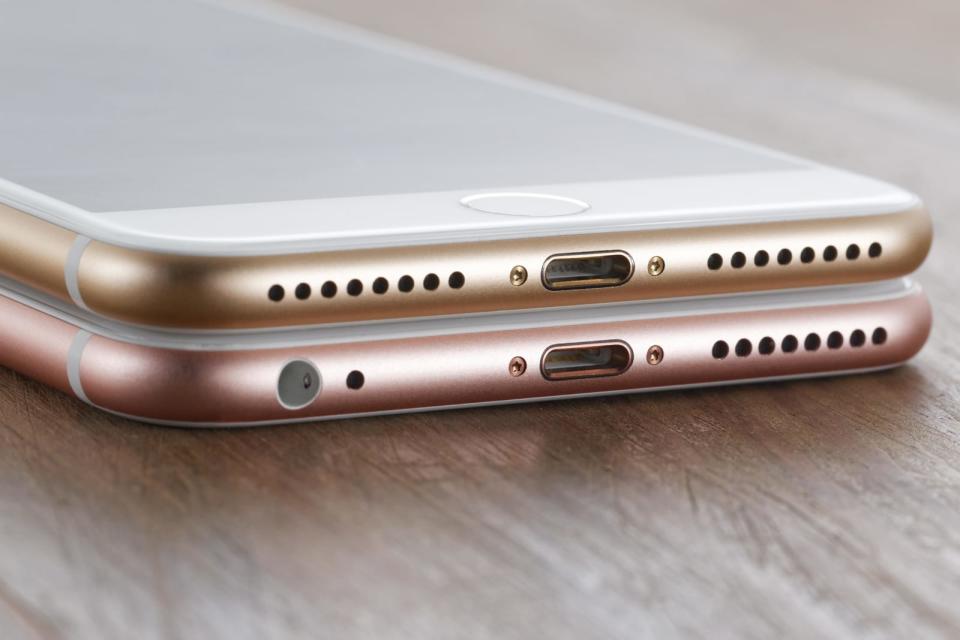
In a transfer described by Apple advertising and marketing government Phil Schiller as “courage,” nixing the headphone socket ended up changing into the most important headline to return from the iPhone 7 launch in 2016. Each flagship iPhone since has lacked the jack, with the latest iPhone to incorporate it being the unique iPhone SE.
To make the change extra palatable, Apple bundled a Lightning-to-3.5mm adapter (anticipate extra dongle chat later) with the iPhone 7, 8 and X. In-box headphones additionally swapped from the standard jack to Lightning. Naturally, this meant you couldn’t cost the cellphone when you listened to music, until you already had a pair of wi-fi headphones.
After all, this transfer was finally instrumental in making true wi-fi earbuds ubiquitous. Whereas Apple wasn’t remotely the primary firm to introduce wi-fi earbuds (after which headphones), the removing of the headphone jack undoubtedly sped up adoption. Pour one out for the Bragi Sprint, the Jabras, the Jaybirds of this world.
Conveniently, alongside the aforementioned iPhone 7, Apple introduced the AirPods. Options like one-tap setup and computerized pairing introduced the comfort individuals anticipated of Apple and put it right into a tiny white case.
Regardless of early resistance and “bragging” from rivals who clung onto the headphone jack, at this level, the socket is usually confined to cheaper smartphones or telephones aimed toward audiophiles (hello, Sony) or cellular avid gamers (ASUS ROG).
Finally, the iPad Professional additionally misplaced its headphone jack, and the remainder of the corporate’s tablets adopted. The one non-Mac system to maintain the jack? The iPod Contact, which had one till its discontinuation in 2022.
Bespoke ports (2016)
Engadget
2016 was the 12 months of donglegate. Apple’s MacBook Professional redesign that 12 months was one other drastic shift within the laptop computer’s historical past. Chasing ever-thinner profiles and fewer port fuss, Apple stripped away almost each legacy connector that professionals relied on. This was significantly jarring after the previous-generation MacBook Professional (2015) was typically cited as the height of utility, with a MagSafe charging port, two Thunderbolt 2 ports, two USB-A ports, to not point out a full-size HDMI port and an SD card slot.
These had been changed with 4 (or on the most affordable 13-inch MBP solely two!) Thunderbolt 3 USB-C ports and a headphone jack. For energy customers (like some Engadget editors), it demanded dongles (probably a number of ones) with a view to join your USB-A thumb drive, wired web, SD playing cards, exterior screens and effectively, at that time, just about all the things. Many had been significantly livid with the lack of the MagSafe charging connector. After all, this additionally meant that a type of USB-C ports can be used primarily to cost the MBP. This sped up the supply of USB-C peripherals and equipment — maybe as a result of everybody was sick of carrying round so many dongles and hubs — however we nonetheless have USB-A units. HDMI is all over the place. I nonetheless have SD Playing cards.
Finally, Apple course-corrected itself. The 2021 MacBook Professional redesign reintroduced the SD card reader and HDMI port, and even MagSafe returned, releasing up a USB-C port.
Trending Merchandise
CORSAIR 3500X ARGB Mid-Tower ATX PC...
Acer Aspire 3 A315-24P-R7VH Slim La...
Logitech Wave Keys MK670 Combo, Wi-...
HP 330 Wi-fi Keyboard and Mouse Com...
CHONCHOW LED Keyboard and Mouse, 10...
SAMSUNG 34″ ViewFinity S50GC ...
Cudy TR3000 Pocket-Sized Wi-Fi 6 Wi...

KEDIERS White PC CASE ATX 5 PWM ARG...
Nimo 15.6 FHD Pupil Laptop computer...