Finding out historical historical past means encountering some unsettling traditions. For me, that included studying about “sunjang,” a funeral observe through which servants have been buried alive with their masters. With advances in genetic know-how, scientists at the moment are gaining new insights into the motivations and traits of this grim custom.
In a latest Science Advances examine, a world analysis workforce performed a DNA examine of 78 skeletons from a Korean cemetery courting again to between 57 BCE and 668 CE, through the Three Kingdoms interval. The tomb, attributed to the Silla Kingdom, turned up genetic proof of inbreeding and exogamy that distinctly “differ from patrilocal techniques noticed in historical Europe,” the paper famous.
“Primarily based on archaeological information, we posed questions relating to blood relations and kinship constructions in Silla society,” Daewook Kim, the examine’s co-lead creator and a curator at Yeongnam College Museum in South Korea, instructed Gizmodo. “These questions have been addressed by integrating bioanthropological evaluation of human stays with molecular genetic analysis of historical DNA, finally resulting in our archaeological conclusions.”
Til demise do us half… actually
Sacrificial burials like sunjang have truly been recorded all over the world in historical occasions, for causes together with, however not restricted to, “useful resource conflicts, ritualistic practices, and justification of the buildup of wealth and energy,” in line with the paper. In Silla, historic data point out that the observe was to consolidate the rank and social standing of nobelmen.
“This observe displays each the authority to take lives for the sake of the afterlife and the hierarchical nature of the society on the time,” Kim defined. “Quite a few instances of sunjang have been recognized on the Imdang and Joyeong-dong tomb complexes in Gyeongsan, which have been the main focus of this examine.”
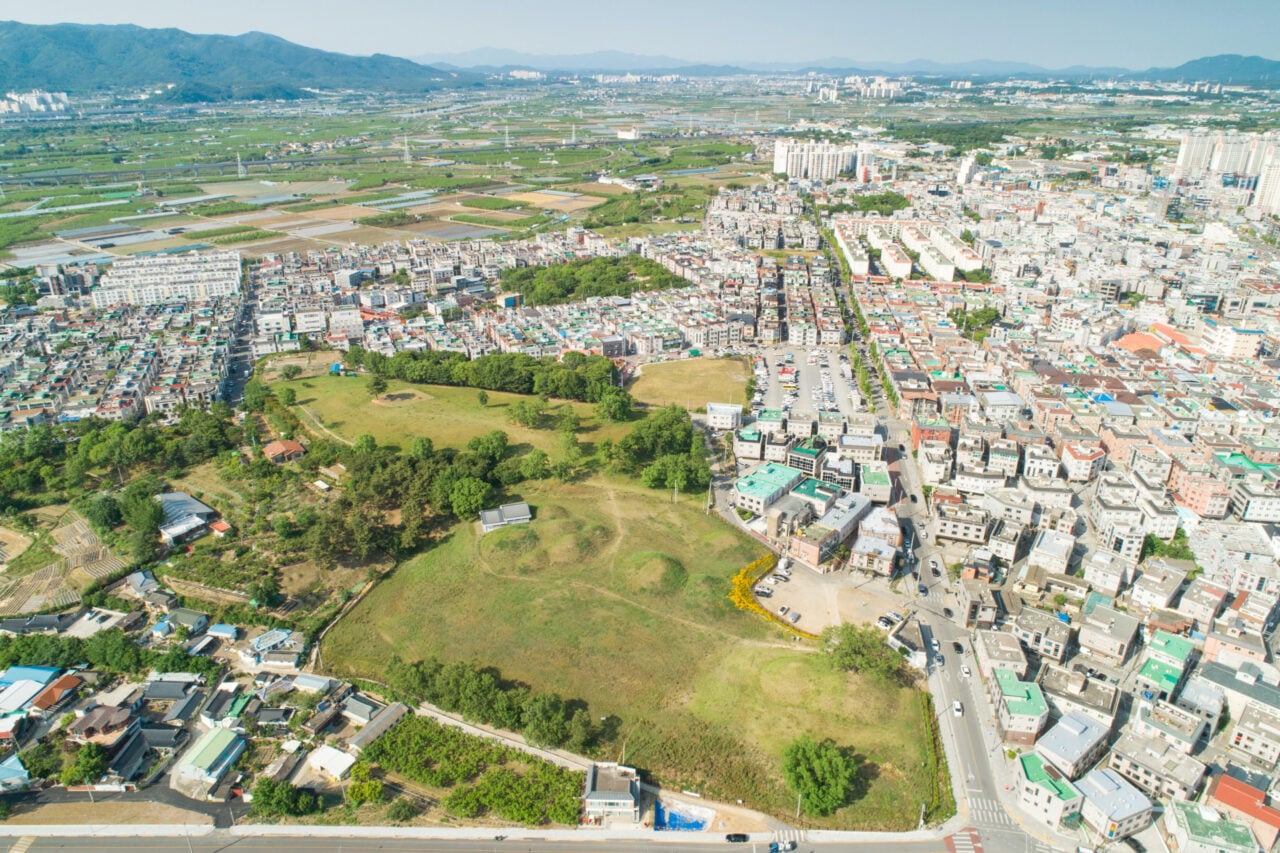
In accordance with the Encyclopedia of Korean Culture, kings and social elites have been buried with servant girls, troopers, coachmen, and extra—people that the tomb proprietor “required,” presumably within the afterlife. Sacrificial victims have been usually of their late teenagers to thirties and gave the impression to be in comparatively good bodily well being. The observe was banned in 502 CE.
Each native and worldwide students knew of sunjang and comparable practices by means of historic data and archaeological discoveries. Nevertheless, genetic research to substantiate that such mass burials truly occurred as suspected have been scarce, notably for historical civilizations outdoors of Europe.
Grave genetics
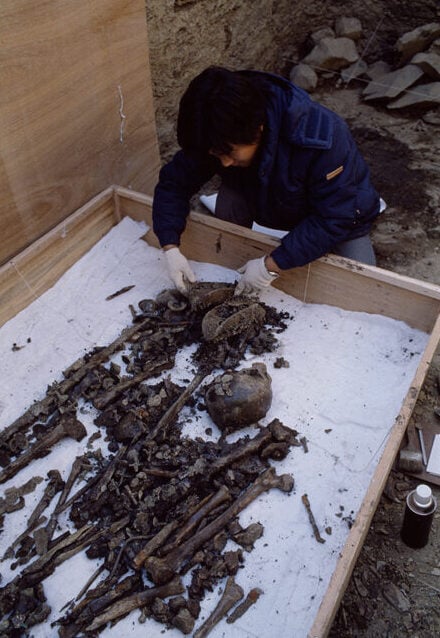
The brand new examine sought to deal with this problem by learning the cemetery advanced in Gyeongsan, a metropolis identified to host many archaeological websites for Silla-era burials. The DNA outcomes each confirmed earlier suspicions and revealed new insights. Primarily based on the varied artifacts and equipment within the graves, the workforce was in a position to establish the “tomb house owners,” or the elite people who received their very own burials. The people sacrificed in sunjang displayed totally different burial patterns that point out they have been buried collectively in mass graves.
As for genetic relations, the workforce found 11 pairs of first-degree kinfolk (mother and father, youngsters, or siblings); 23 pairs of second-degree kinfolk (cousins or grandparents); and 20 pairs of extra distant kinfolk. In three instances, mother and father and youngsters have been sacrificed collectively in retainer graves, supporting historic data suggesting that whole households “participated” on this custom, in line with a statement from Seoul Nationwide College.
There have been additionally 5 instances of close-kin marriage for each tomb house owners and sacrificed attendants, which means “close-kin marriage “could not have been a observe unique to the royal elite however a broader societal customized,” Ji-won Oh, a biologist at Yonsei College in South Korea who wasn’t concerned within the examine, instructed Donga Science.
Historic funerary customs
That stated, and because the workforce admits within the new examine, the outcomes are constrained by the “ambiguous burial standing” of some our bodies—which, once more, are presumably greater than 2,000 years outdated. The tombs analyzed for this examine additionally symbolize a restricted area and can’t characterize funerary customs as a complete.
Nonetheless, the workforce is worked up to develop paleogenomic investigations past European websites, because the findings might inform comparable investigations in Asia. Jack Davey, director of the Early Korean Research Middle in Cambridge, instructed Live Science that the examine is significant in that it studied skeletons from the traditional Three Kingdoms, which itself is uncommon. As an illustration, the invention of household-wide sunjang practices “raises questions on institutionalized violence, slavery, and social mobility on this 1,500-year-old Korean kingdom,” defined Davey, who wasn’t concerned within the new work.
“Bioarchaeological analysis based mostly on human stays has the potential to proceed increasing, together with research on historical pathogen DNA, genetic illnesses, and stress patterns,” Kim concluded to Gizmodo. “Such analysis will enable us to reconstruct the lives of historical folks in a lot larger element.”
Trending Merchandise

CORSAIR 3500X ARGB Mid-Tower ATX PC...

Acer Aspire 3 A315-24P-R7VH Slim La...

Logitech Wave Keys MK670 Combo, Wi-...

HP 330 Wi-fi Keyboard and Mouse Com...

CHONCHOW LED Keyboard and Mouse, 10...

SAMSUNG 34″ ViewFinity S50GC ...

Cudy TR3000 Pocket-Sized Wi-Fi 6 Wi...

KEDIERS White PC CASE ATX 5 PWM ARG...

Nimo 15.6 FHD Pupil Laptop computer...